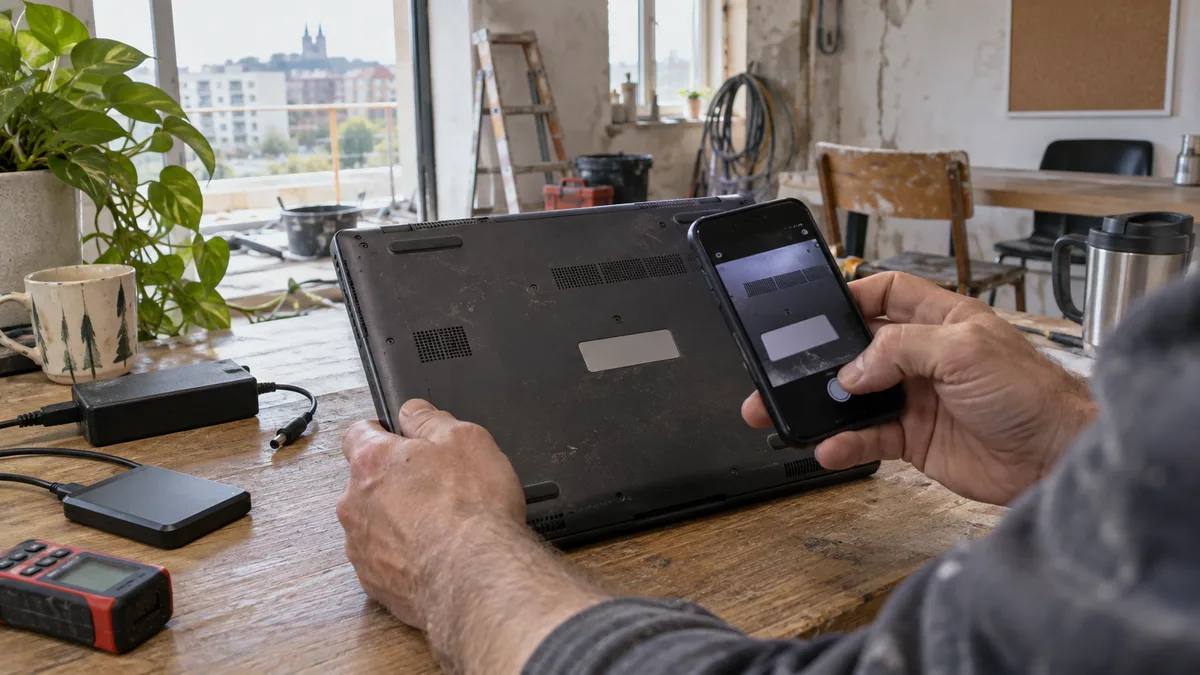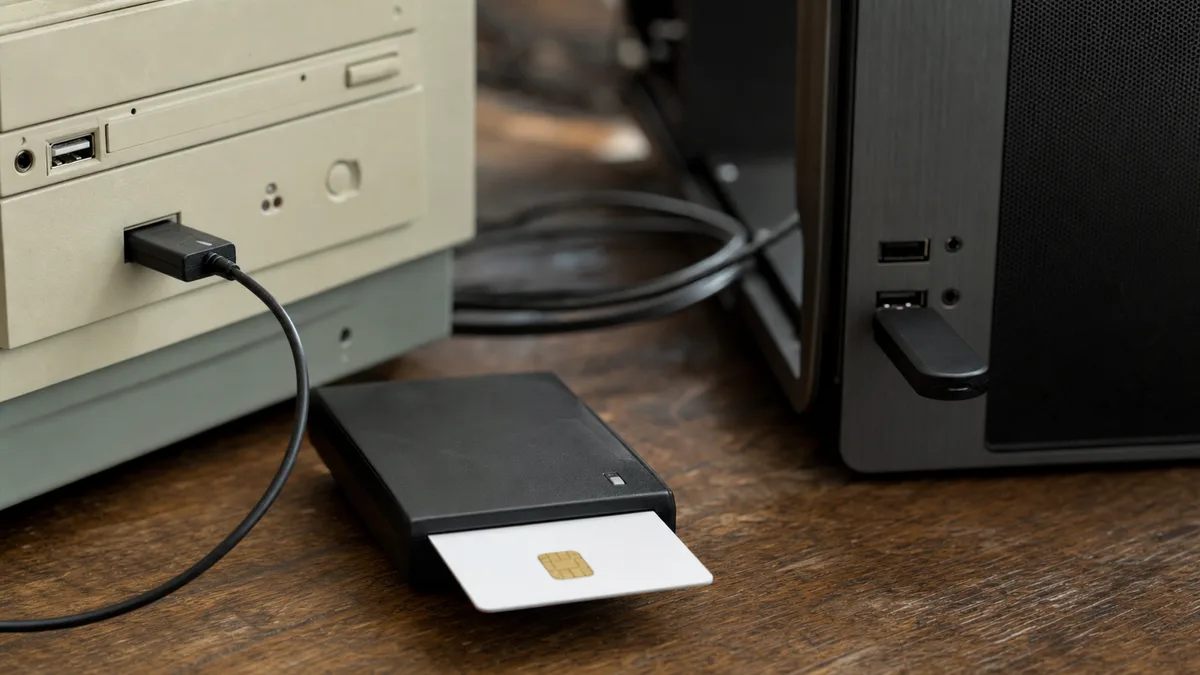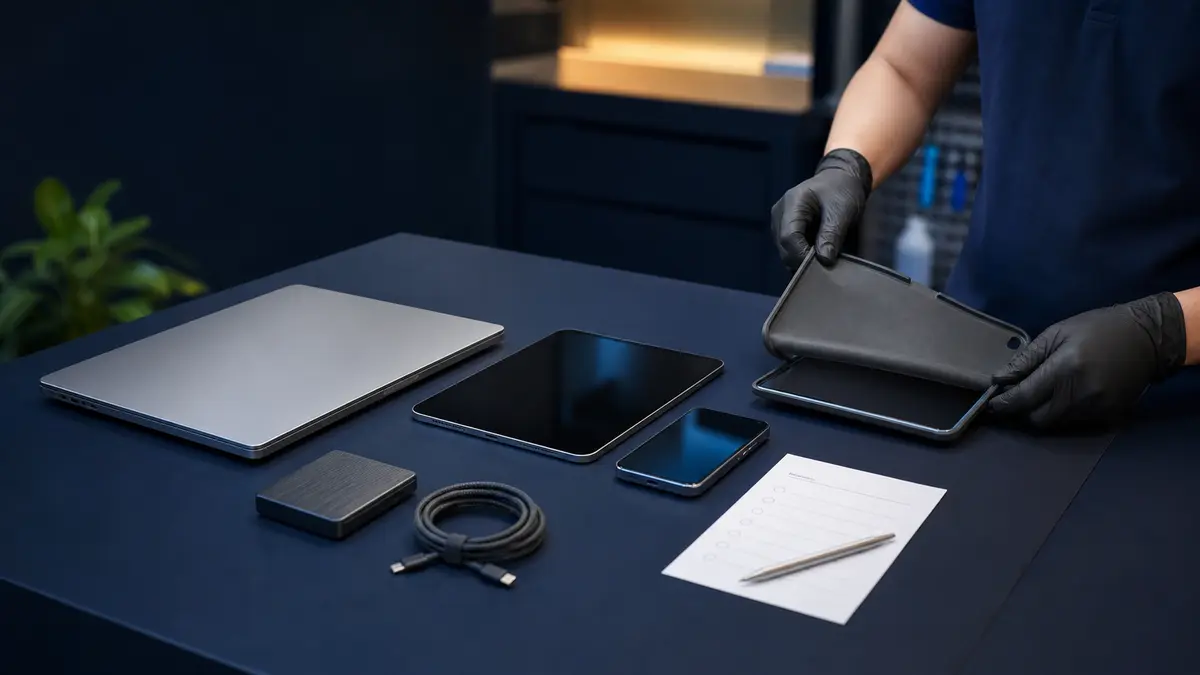
People often bring in a 7-8 year old laptop convinced it’s a write-off. After diagnostics it turns out a Windows reinstall and an SSD swap are all it needs — and the machine runs briskly again. Not every old computer is that lucky, though. Let’s go through how to tell the difference.
Three roads ahead of you
When a computer is acting up, you essentially have three options. Reinstall the system and hope it takes. Replace one of the components. Or give up and buy a new machine. Each option suits a different situation — and, above all, a differently aged piece of hardware.
1. Reinstalling Windows: when software is dragging down the hardware
The most common case. The computer takes three minutes to start, programs open forever, and now and then a strange message pops up. Yet the hardware isn’t all that bad.
After years of doing this for a living, I keep seeing the same thing: Windows simply gets clogged over time. Update on top of update, leftovers from uninstalled programs, overlapping drivers. The result is that even a decent processor and plenty of RAM end up wading through a swamp.
When a reinstall helps:
- The computer is 2-5 years old and has at least 8 GB of RAM
- The processor is an Intel i5/i7 8th generation or newer (or an AMD Ryzen)
- The main problem is system speed, not crashes or blue screens
- The disk isn’t completely full (you have at least 30 GB free)
If that fits, a Windows reinstall solves 80% of problems — including making those annoying error messages from the last six months disappear.
2. Upgrading components: when swapping one thing is enough
Sometimes a reinstall isn’t enough because the hardware genuinely can’t keep up. That doesn’t mean you have to throw out the whole machine.
The most common performance killer is an old mechanical hard drive. I once had a laptop from 2019 — a decent machine otherwise, but with a 1 TB 5400 rpm HDD. System boot: 4 minutes 20 seconds. After swapping it for an SSD and reinstalling? 22 seconds.
When an upgrade makes sense:
- You have an HDD instead of an SSD — swapping in an SSD changes everything (worth checking current prices: NAND prices rose through 2025-2026)
- You have 4 GB of RAM and the motherboard supports more — going to 8 GB costs very little
- The laptop battery lasts 20 minutes — a new one is still far cheaper than a new laptop
If the core of the machine (processor, board) is still relevant, upgrading a single component extends its life by another 2-3 years.
3. A new computer: when it’s no longer worth the struggle
And then there’s the third group. Machines that have served their time. Not because they can’t be repaired, but because the cost of the repair would exceed half the price of a comparable new device.
When to go new:
- The computer is more than 7-8 years old and the processor is an Intel 4th generation or older
- The motherboard has a faulty chipset or graphics chip (on a laptop that means replacing the whole board)
- You have a cracked laptop display where a new panel costs nearly as much as the laptop is worth
- You need performance for new applications and even an upgrade won’t reach the level you need
A practical test: work out where you stand in 10 minutes
Before you decide, run a quick test. Nothing complicated — anyone can do it.
Step 1: How old is the hardware?
Press Win + R, type msinfo32 and Enter. Look at the Processor and the BIOS Version/Date entries. That gives you the approximate age of the machine.
If you see an Intel Core i3/i5/i7 with a model number starting with 8 or higher (say, i5-8250U), you’re in good shape. If it starts with 4 or lower, that’s a warning sign. For AMD, look for Ryzen — if you have an A-series or an Athlon, it’s an older piece.
Step 2: How much RAM do you have?
In the same window you’ll find “Installed Physical Memory (RAM)”. 4 GB is too little even for browsing the web today. 8 GB is the minimum for comfortable work. 16 GB is the sweet spot.
Step 3: HDD or SSD?
Open Task Manager (Ctrl + Shift + Esc), the Performance tab, click Disk. Top right you’ll see the disk type. If it says “HDD” or “Hard disk” rather than “SSD”, you’ve found the prime suspect for the slowness.
Step 4: What’s loading the system?
In Task Manager, on the Processes tab, look at what’s eating CPU and memory. If disk usage sits permanently at 100% while the processor is at 20%, it’s almost certainly the disk. If the processor runs at 90% even when idle, something’s wrong with the system or the processor is simply weak.
What to do about it
If you’ve concluded that a reinstall or an upgrade makes sense, you have two paths.
The DIY route: download the Media Creation Tool from Microsoft, create an installation USB, and reinstall. Don’t forget to back up your data first. If you’ve never done it, plan for 3-5 hours including drivers and programs.
Common mistakes in a home reinstall:
- You forget the network card driver and have no internet after installation
- You wipe the recovery partition, which you’ll never get back
- You install Windows 11 on hardware it doesn’t officially support, and a month later updates stop arriving
If you don’t fancy it, or don’t have time, there’s the second path: a professional.
When you need a professional
A good shop deals with this daily and knows exactly what to look at first, what’s worth doing and what isn’t — and has the tools and procedures that are hard to reproduce at home.
Before any reinstall, always measure the disk’s health with a SMART analysis. Sometimes it turns out the disk has hundreds of bad sectors and is about to fail — in which case a reinstall would be wasted effort, and replacing the disk first is the better move.
If you’re unsure whether it’s worth it, a quick diagnostic check of the hardware tells you straight whether the repair pays off or it’s time for a new machine. No unnecessary spending.
Rather not deal with it yourself?
Book a diagnosis in Brno — you get the price up front and we start only once you agree.
Where to find us
We are a PC and laptop repair shop in Brno-Židenice: diagnostics and repairs of computers and laptops, data recovery from drives, and out-of-warranty Apple repairs (iPhone 12 and newer, MacBook, iPad).
Viniční 3587/216, 615 00 Brno-Židenice, Czech Republic Mon–Fri 10:00–16:00
Call +420 774 777 774 Computer repair and laptop service in Brno
We put the repair price in writing after diagnostics and carry on only once you agree.